
 Pin it
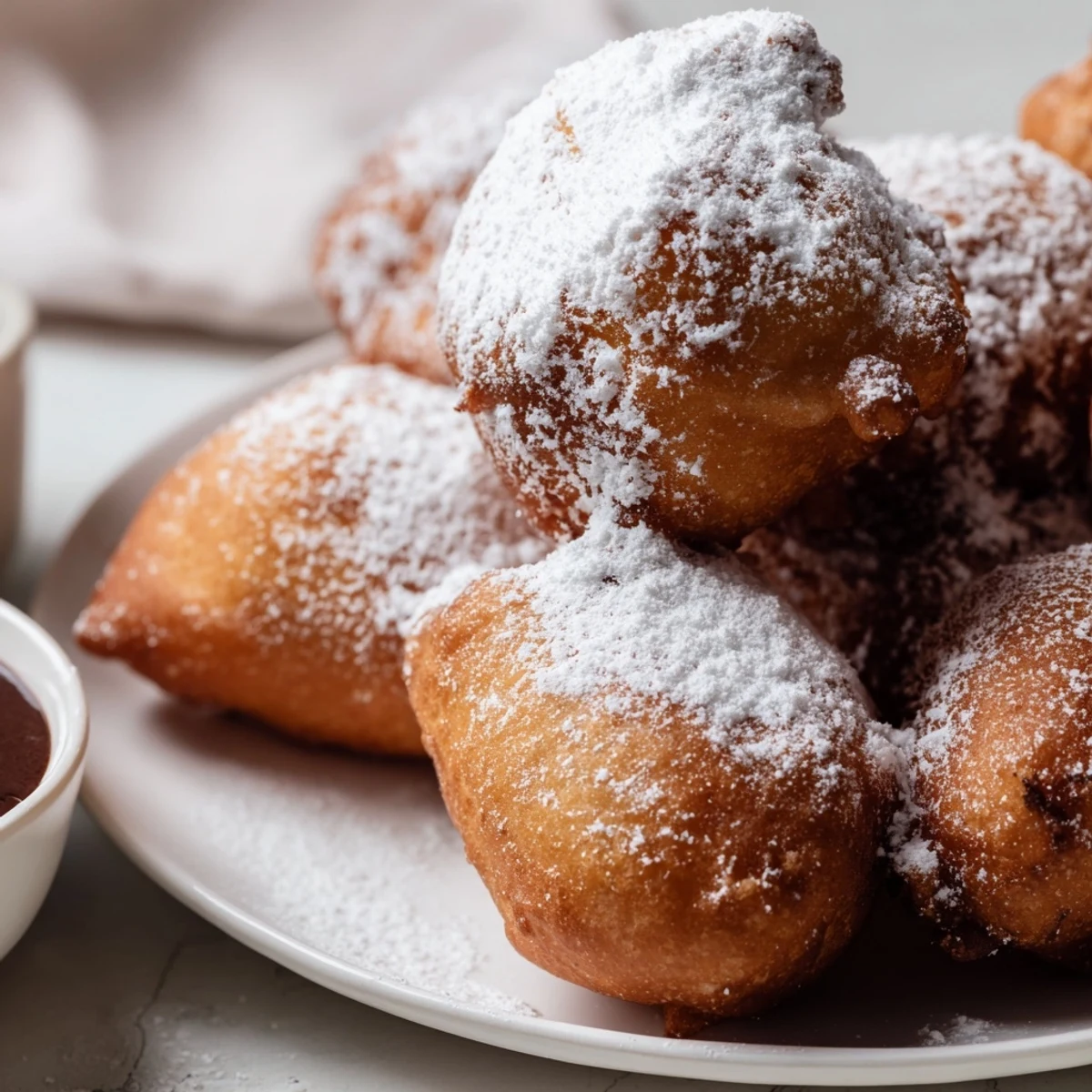
 These authentic vanilla French beignets deliver the perfect balance of light, airy texture and rich vanilla flavor. The yeasted dough rises to pillowy perfection before being fried to golden brown and generously coated in powdered sugar. The entire process rewards patience with café-quality results that rival any New Orleans bakery.
The dough comes together quickly with pantry staples, though the rising time requires about two hours of planning ahead. Frying achieves that signature crisp exterior and tender, chewy interior that makes beignets irresistible. Serve them warm for breakfast, as an afternoon treat with coffee, or as an elegant dessert.
My kitchen still smells like vanilla and hot oil from the first time I attempted beignets on a rainy Sunday morning. I'd just returned from a trip to New Orleans where I'd eaten my weight in these pillowy squares at Café du Monde, and I was determined to recreate that magic at home. The dough was stickier than I expected, and I ended up with flour everywhere, but when that first batch hit the oil and puffed into golden clouds of perfection, I knew I'd found something special.
Last winter, my neighbor's kids came over while I was making a batch, and I ended up with powdered sugar snow covering half my kitchen. Their eyes widened as they watched the dough squares puff up in the hot oil like magic, and we ended up sitting around the counter, fingers sticky with sugar, eating beignets faster than I could fry them. It became a weekly ritual after that, and now every time I make them, I think about laughter rising like steam from a warm mug.
Ingredients
- All purpose flour: This forms the structure of your beignets, so measure accurately for the right texture
- Granulated sugar: Just enough to balance the dough without making it too sweet before frying
- Active dry yeast: Make sure your yeast is fresh and bubbly after blooming for the best rise
- Salt: A small amount that enhances all the other flavors without being noticeable
- Whole milk: Lukewarm is key here, as hot liquid will kill your yeast and cold will slow it down
- Warm water: Used to bloom the yeast, should feel comfortably warm to the touch
- Large eggs: Room temperature eggs incorporate better into the dough for consistent results
- Unsalted butter: Melt and cool it completely so it does not scramble the eggs when mixed
- Pure vanilla extract: The secret ingredient that elevates these from ordinary doughnuts to something special
- Vegetable oil: A neutral oil with a high smoke point is essential for deep frying
- Powdered sugar: Generous dusting is non negotiable, it is half the experience of eating beignets
Instructions
- Wake up the yeast:
- Combine the warm water and yeast in a small bowl, letting it sit for about 5 minutes until you see a foamy layer on top, which tells you the yeast is alive and ready to work.
- Mix the dry ingredients:
- In your stand mixer bowl, whisk together the flour, sugar, and salt until evenly combined, creating a well in the center if you are mixing by hand.
- Build the dough:
- Pour in the activated yeast mixture, warm milk, room temperature eggs, cooled melted butter, and vanilla extract, then mix with the dough hook on medium speed for 5 to 7 minutes until you have a smooth, slightly tacky dough that pulls away from the sides of the bowl.
- Let it rise:
- Transfer the dough to a lightly oiled bowl, cover with plastic wrap, and place it somewhere warm for 1 to 1.5 hours until it has doubled in size and feels puffy when you touch it.
- Roll and cut:
- Punch down the risen dough gently, turn it out onto a floured surface, and roll to about half an inch thick, then cut into 2 inch squares using a sharp knife or pastry cutter.
- Second rise:
- Arrange the squares on a parchment lined baking sheet, cover loosely with a towel, and let them rest for another 30 minutes until they look slightly puffed.
- Heat the oil:
- In a large, heavy bottomed pot, heat your vegetable oil to 350°F, using a kitchen thermometer to maintain the right temperature throughout frying.
- Fry to golden:
- Carefully drop a few beignets into the hot oil, frying for 1 to 2 minutes per side until they are deeply golden brown and puffed, being careful not to crowd the pot.
- Drain and dust:
- Lift the beignets out with a slotted spoon, let them drain on paper towels for just a moment, then immediately coat them generously with powdered sugar while they are still warm.
 Pin it
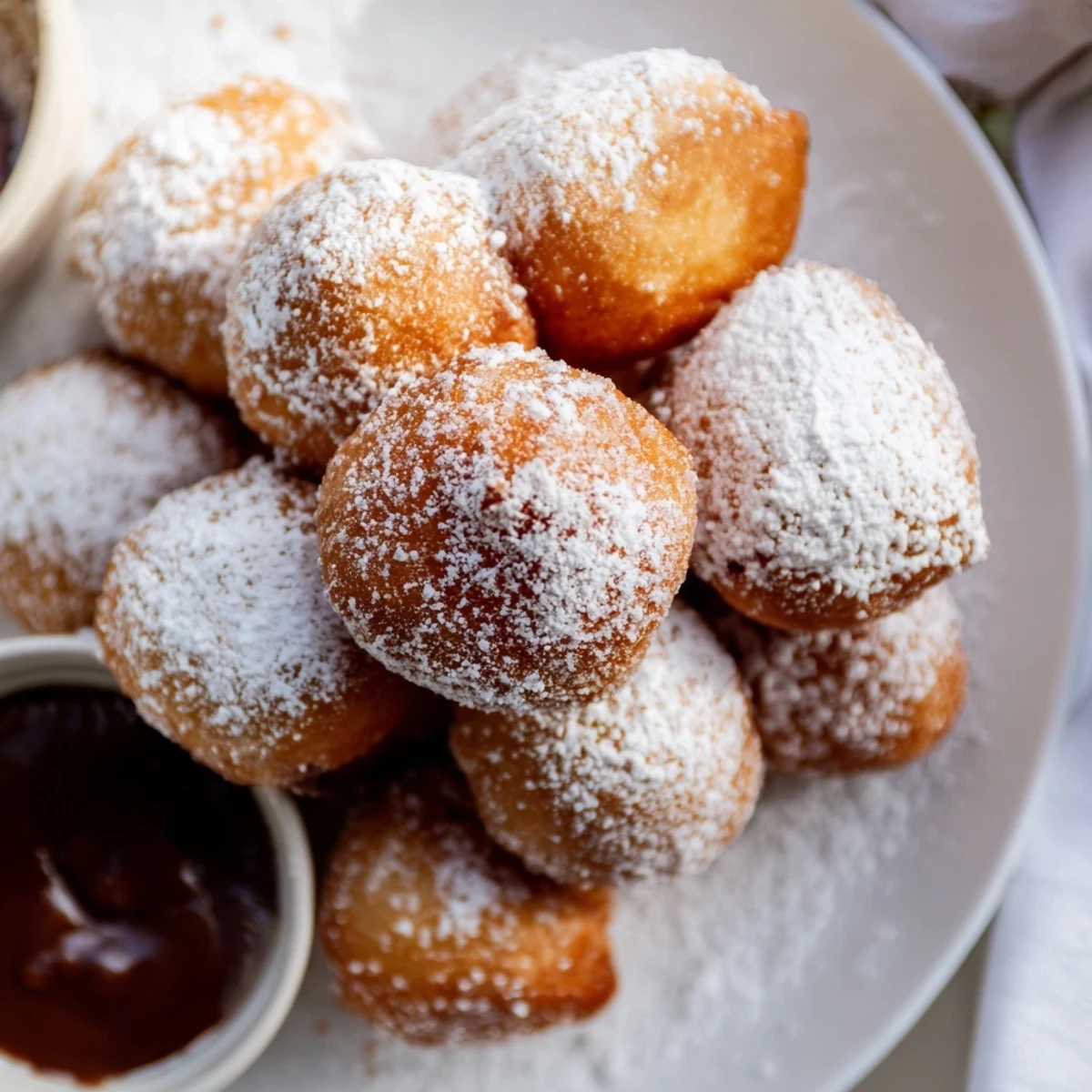
 There is something almost meditative about standing over a pot of hot oil, watching these simple squares of dough transform into golden pillows. My partner wandered in during my last batch and just stood beside me, wordlessly handing me the powdered sugar when I needed it, and we ended up eating dinner for dessert that night because nobody wanted to stop at just one.
Getting The Perfect Rise
Temperature is everything when it comes to yeast doughs. If your kitchen runs cold, find the warmest spot, maybe near a preheating oven or a sunny window, and give the dough the time it needs. Rushing the rise will give you dense, heavy beignets instead of the light, airy texture you are after.
Frying Like A Pro
A clip on thermometer is worth the investment if you make fried treats often, as guessing the oil temperature almost always leads to disappointment. I keep a small bowl of water nearby to check if the oil is ready, tiny bubbles should form instantly when a droplet hits the surface, but the thermometer gives you the real precision you need.
Serving Ideas
While plain beignets with just powdered sugar are classic, I love setting out small bowls of warm chocolate sauce, honey, or even lemon curd for dipping. A dusting of cinnamon mixed into the powdered sugar creates a whole different experience, and a teaspoon of lemon zest in the dough adds a brightness that cuts through the richness.
- These are best within an hour of frying, though you can refresh them briefly in a 350°F oven
- Make sure to have extra powdered sugar on hand because you will almost certainly need more than you think
- A mug of strong café au lait or hot chocolate is the perfect companion to balance the sweetness
 Pin it
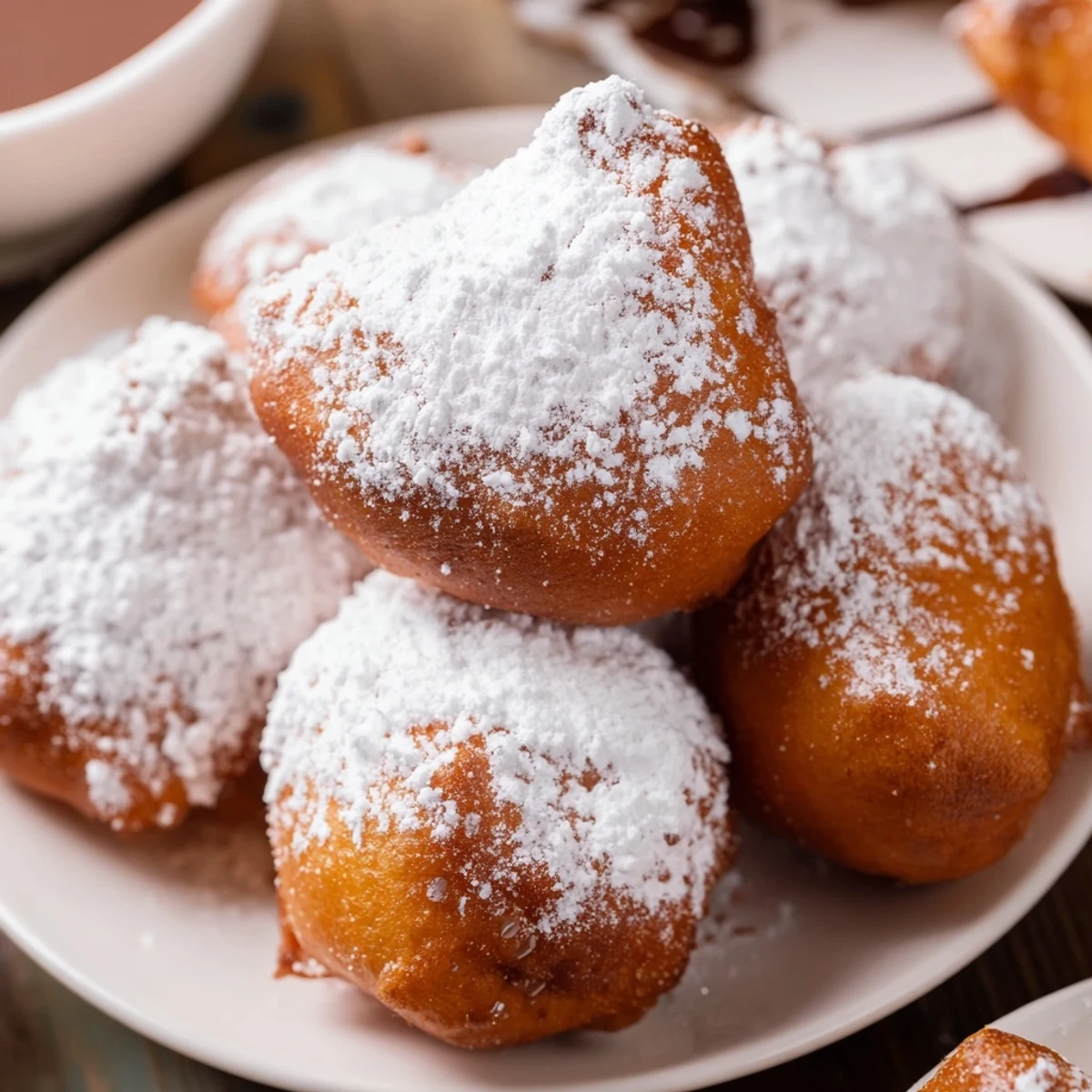
 Some recipes are just meant to be shared, and beignets top that list. There is a reason these have been bringing people together around tables for generations, and I hope they become part of your story too.
Recipe FAQs
- → What makes beignets different from regular donuts?
-
Beignets are made from a yeast-based dough similar to brioche, creating a light, airy interior with a crisp exterior. Unlike cake donuts, they're deep-fried without a hole and traditionally served piping hot with generous powdered sugar coating.
- → Can I make the dough ahead of time?
-
Absolutely. Prepare the dough through the first rise, then refrigerate overnight. Bring to room temperature before rolling and cutting. The cold fermentation actually enhances flavor development and makes handling easier.
- → What's the best oil temperature for frying?
-
Maintain oil at 350°F (175°C) using a kitchen thermometer. Too cool results in greasy, dense pastries; too hot burns the exterior before the interior cooks through. Fry in small batches to prevent temperature drops.
- → Why did my beignets turn out dense or heavy?
-
Dense beignets usually indicate under-proofed dough or oil that's too cool. Ensure dough doubles in size during both rises. Avoid overworking the dough when rolling, and let cut pieces rest briefly before frying.
- → Can I bake these instead of frying?
-
Baking won't achieve the authentic texture—frying creates the signature crispy exterior and soft interior. If you must bake, brush with butter and bake at 400°F until golden, though they'll resemble sweet rolls more than true beignets.
- → How should I store and reheat leftovers?
-
Beignets taste best immediately but can be stored in an airtight container for 1 day. Reheat in a 350°F oven for 3-4 minutes to restore crispness. Avoid microwaving, which makes them tough. Re-dust with sugar after reheating.
