
 Pin it
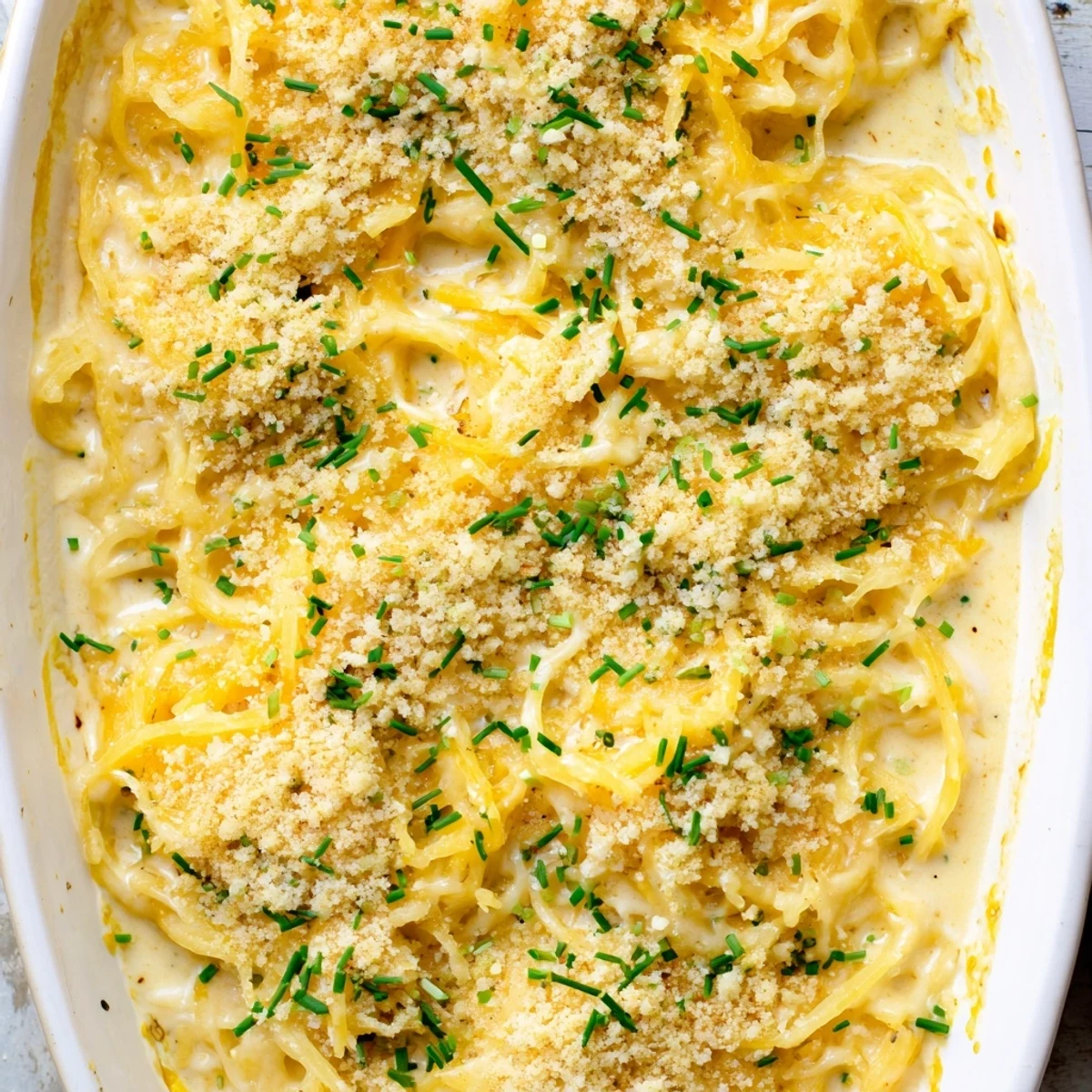
 This comforting dish transforms roasted spaghetti squash into tender, noodle-like strands that get coated in a velvety homemade cheese sauce. The combination of sharp cheddar and optional Gruyère creates that familiar cheesy satisfaction while naturally reducing carbohydrates.
Roasting the squash first concentrates its subtle sweetness and creates the perfect texture—fibrous strands that mimic pasta but bring their own delicate flavor. The sauce comes together quickly on the stovetop, starting with a simple roux and building layers of savory depth with garlic powder and ground mustard.
The result is a bowl of creamy, cheesy comfort that feels indulgent yet leaves you light and satisfied. An optional breadcrumb-Parmesan topping adds irresistible crunch, though the dish is equally satisfying straight from the stovetop.
The smell of roasting squash and melting cheese filling the kitchen on a rainy Tuesday evening is the kind of comfort that no takeout order can replicate. My neighbor Linda stopped by that night to return a borrowed casserole dish, took one whiff from the hallway, and never actually left until the baking dish was empty. Spaghetti squash mac and cheese had been on my list for months, always pushed aside for the boxed version, until a farmers market impulse buy changed everything. That lopsided squash sitting on the counter dared me to try.
I made this for my sister who has been gluten-free for three years and honestly tolerates most pasta substitutes with polite silence. She went back for seconds, then wrapped a portion in foil for the road, which in our family is the highest compliment a dish can receive.
Ingredients
- 1 large spaghetti squash, about 1.2 kg: Pick one that feels heavy for its size with a firm, unblemished skin because that signals freshness and better texture after roasting.
- 2 tablespoons unsalted butter: This forms the base of your roux, so use real butter here since it carries the flavor of the entire sauce.
- 2 tablespoons gluten-free flour or all-purpose flour: Just enough to thicken the milk into something velvety without making it pasty.
- 1 1/2 cups whole milk: Whole milk gives the sauce body that skim or low-fat simply cannot match in this context.
- 1 cup grated sharp cheddar cheese: Grate it yourself from a block because pre-shredded cheese has coatings that prevent smooth melting.
- 1/2 cup grated Gruyere cheese, optional: This is the secret layer of nutty sophistication that makes people ask what is different about your sauce.
- 1/4 teaspoon garlic powder: A quiet background note that rounds out the cheese without competing with it.
- 1/4 teaspoon ground mustard: This tiny amount amplifies cheesiness in a way that salt alone never can.
- 1/4 teaspoon salt and 1/4 teaspoon freshly ground black pepper: Seasoning that balances the richness and keeps the dish from tasting flat.
- 1/4 cup grated Parmesan cheese for topping: Adds a salty, savory crunch when baked into the breadcrumb layer.
- 1/4 cup gluten-free breadcrumbs for topping: Creates that golden crust that makes everyone fight over the corner pieces.
- 1 tablespoon melted butter for topping: Binds the crumbs and cheese together so they toast evenly instead of burning.
- Fresh chives or parsley, chopped: A bright finishing touch that makes the dish look as good as it tastes.
Instructions
- Roast the squash:
- Preheat your oven to 400F, halve the squash lengthwise with a sharp knife, scoop out the seeds, and place the halves cut side down on a parchment lined baking sheet. Roast for 35 to 40 minutes until a fork slides through the flesh easily and the strands pull apart without resistance.
- Build the roux:
- In a medium saucepan over medium heat, melt the butter and whisk in the flour, stirring constantly for one minute until it smells slightly toasty and turns a pale golden color. This cooks out the raw flour taste before any liquid touches the pan.
- Thicken the sauce:
- Gradually pour in the milk while whisking to prevent lumps, then keep stirring for two to three minutes until the mixture coats the back of a spoon like a thin custard. Patience here pays off because rushed sauce stays thin and watery.
- Melt in the cheese:
- Lower the heat and add the cheddar, Gruyere, garlic powder, ground mustard, salt, and pepper, stirring gently until every last bit of cheese has melted into a smooth, glossy sauce. Pull it off the heat as soon as it comes together to prevent the cheese from separating or turning grainy.
- Combine squash and sauce:
- Let the roasted squash cool just enough to handle, then drag a fork through the flesh to create long spaghetti-like strands and pile them into a large mixing bowl. Pour the warm cheese sauce over the top and fold gently so the strands get coated without turning into mush.
- Bake with the topping:
- Transfer everything to a lightly greased baking dish, stir together the breadcrumbs, Parmesan, and melted butter in a small bowl, and scatter the mixture evenly across the surface. Bake at 400F for ten to twelve minutes until the top is golden and the edges are bubbling up through the crumbs.
- Finish and serve:
- Pull the dish from the oven, scatter fresh chives or parsley over the top while it is still hot so the herbs release their fragrance, and serve immediately. The cheese sauce is at its best in those first few minutes when everything is still molten and the topping has maximum crunch.
 Pin it
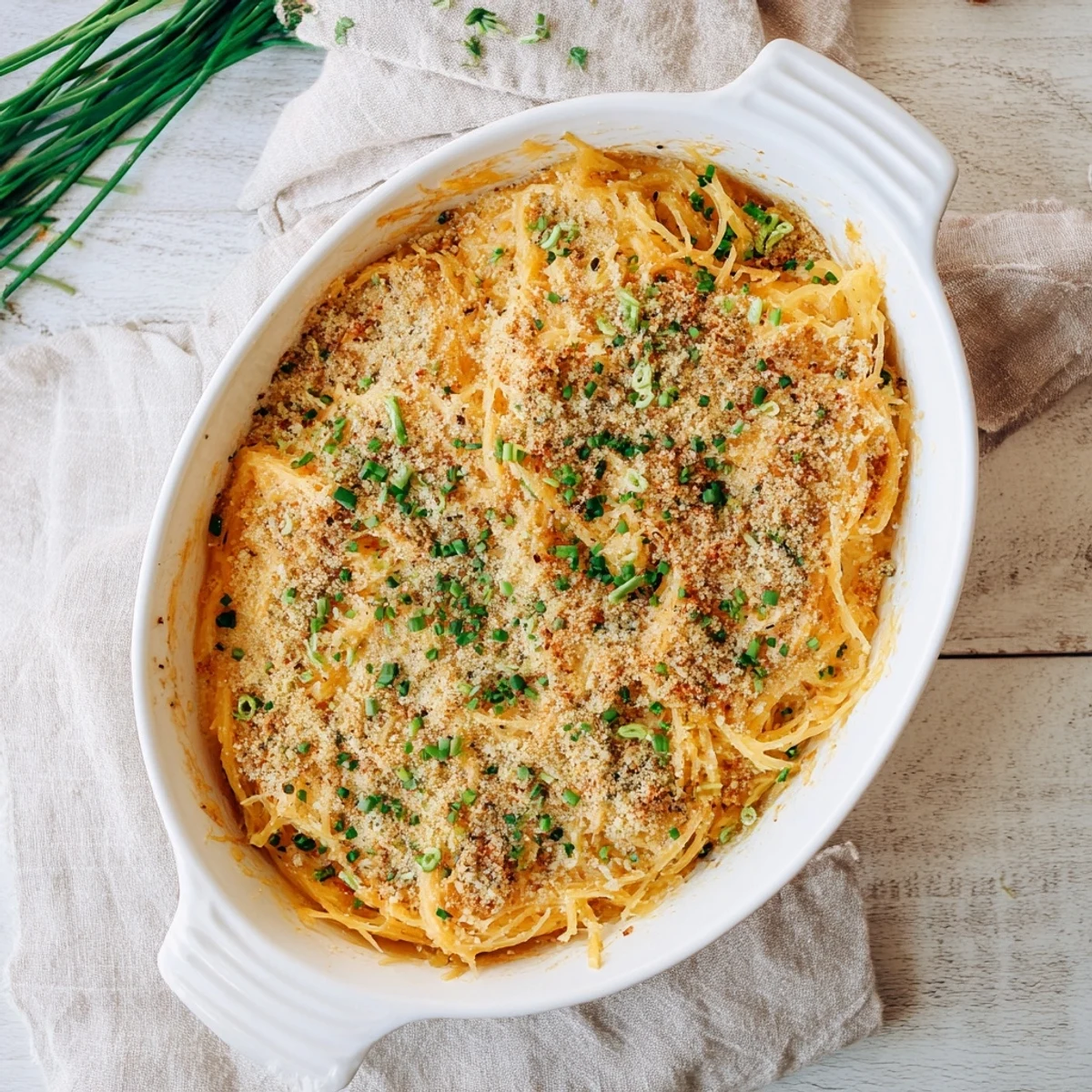
 The night my friend Marcus helped me test this recipe, we ended up standing in the kitchen eating straight from the baking dish with two forks, completely forgetting about the salad I had made to go alongside it.
Serving Ideas That Work
This dish stands well on its own but plays nicely with a crisp green salad dressed in something acidic to cut through the richness. A glass of Chardonnay or even a sparkling water with lemon makes the meal feel complete without weighing it down further.
Making It Your Own
A pinch of smoked paprika in the sauce adds a campfire warmth that pairs beautifully with the Gruyere if you are using it. For extra protein, folded-in chickpeas or shredded rotisserie chicken turn this side dish into a full meal with almost no additional effort.
Storage and Reheating
Leftovers keep well in an airtight container in the refrigerator for up to three days, though the topping loses its crunch overnight. Reheat portions in a 350F oven for about ten minutes rather than using the microwave, which tends to make the squash strands weep and the sauce separate.
- Sprinkle fresh breadcrumbs on top before reheating to bring back some of that original crunch.
- A splash of milk stirred in before reheating helps revive the cheese sauce if it has thickened too much in the fridge.
- Freeze individual portions without the topping for up to one month, then add fresh crumbs when you bake them.
 Pin it
 Some recipes become staples because they are easy, and others earn their spot because they make people happy around the table without anyone feeling sluggish afterward. This one does both, and that is worth keeping in your back pocket for any night that calls for comfort.
Recipe FAQs
- → Is spaghetti squash a good pasta substitute?
-
Spaghetti squash creates remarkably pasta-like strands when cooked, making it an excellent lower-carb alternative. While the texture is slightly more tender than traditional pasta, the fibers catch sauce beautifully and provide a satisfying bite that works particularly well with creamy, cheesy preparations.
- → Can I make this dairy-free?
-
Yes, substitute plant-based milk and your favorite vegan cheese shreds. Nutritional yeast can enhance the cheesy flavor, and adding a bit of tapioca starch helps achieve that signature smooth, stretchy consistency.
- → How do I store leftovers?
-
Store in an airtight container in the refrigerator for up to four days. Reheat gently in the microwave or oven, adding a splash of milk to restore creaminess if the sauce has thickened. The breadcrumb topping will soften but still add texture.
- → What other vegetables work in this style?
-
Butternut squash, zucchini noodles, or cauliflower florets all adapt beautifully to cheese sauce. Each brings a slightly different texture and flavor profile, but the same comforting, creamy preparation works across all of them.
- → Can I freeze this dish?
-
The squash and sauce freeze well for up to three months, though the texture may become slightly softer after thawing. For best results, freeze without the breadcrumb topping and add fresh when reheating in a 350°F oven until bubbly throughout.
- → How can I add more protein?
-
Stir in shredded rotisserie chicken, cooked chickpeas, or white beans. Even simply adding an extra cup of shredded cheese boosts protein significantly while enhancing the rich, satisfying character of the dish.
