
 Pin it
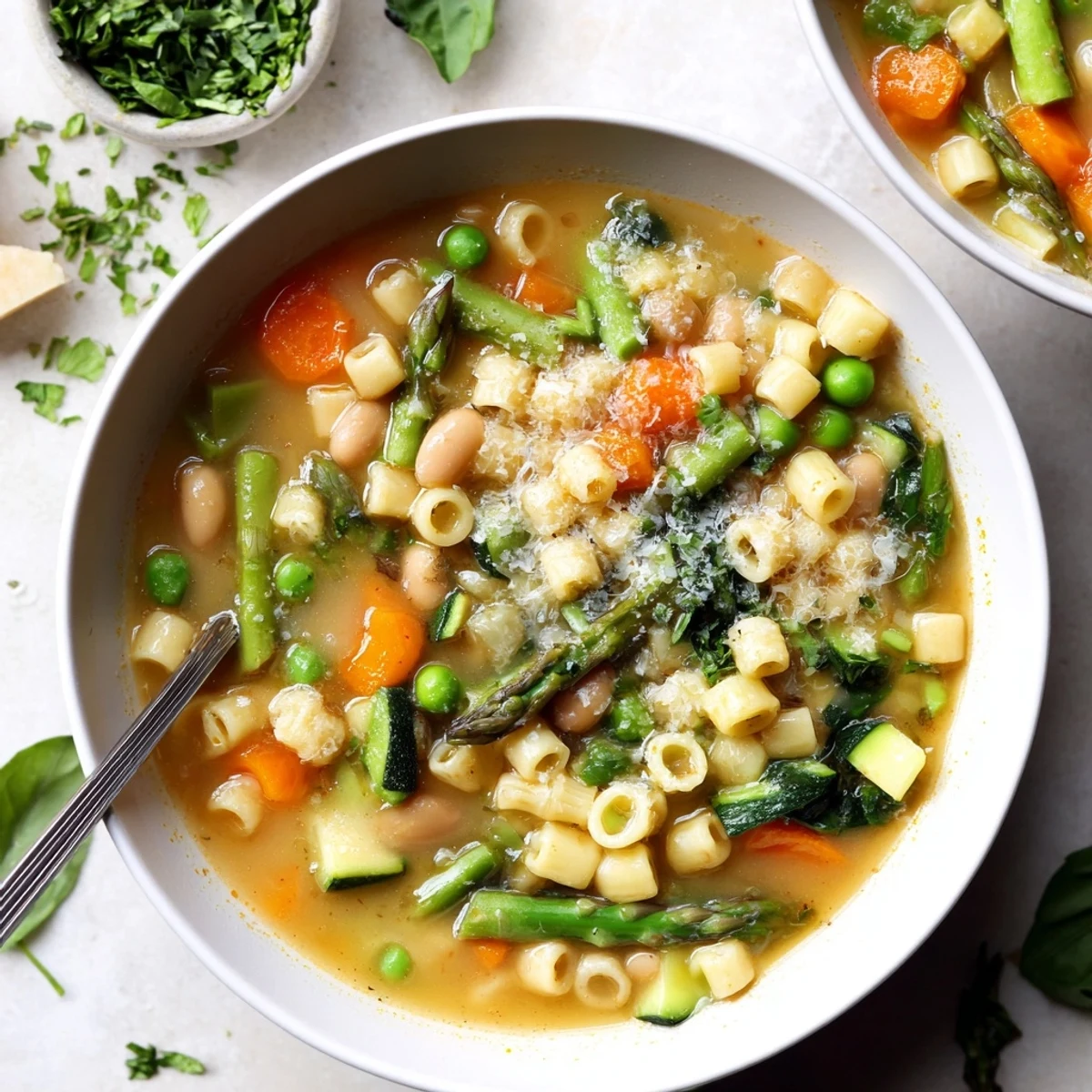
 This spring minestrone brings together the best of the season in one comforting bowl. Diced carrots, asparagus, zucchini, and fresh peas simmer alongside cannellini beans and small pasta in a fragrant vegetable broth. Fresh basil, parsley, and a squeeze of lemon brighten every spoonful, while optional Parmigiano Reggiano adds a savory finish. Ready in under an hour, it's a naturally vegetarian dish that pairs beautifully with crusty bread and a crisp Pinot Grigio.
My neighbor Anna brought over a container of something green and glorious last April, and I stood at the kitchen counter eating it cold with a wooden spoon before I even asked what it was. That bowl of spring minestrone completely rewired how I thought about soup and the season itself.
I made a double batch for a rainy Sunday lunch with friends and watched two people who claimed they hated soup go back for thirds. One of them actually groaned out loud after the first bite, which made the rest of us laugh so hard we almost spilled our wine.
Ingredients
- Olive oil: A good extra virgin makes a real difference here since it is the foundation of everything that follows
- Onion and garlic: The aromatic base that turns a pot of water into something with actual soul
- Carrots: Diced small so they cook at the same rate as the delicate vegetables
- Asparagus: Cut into inch pieces so every spoonful gets a bright tender bite
- Zucchini: Adds bulk without heaviness and soaks up the herby broth beautifully
- Peas: Fresh if you can find them but frozen work perfectly fine in a pinch
- Baby spinach: Goes in at the very end so it stays vibrant and never turns muddy
- Vegetable broth: Use a quality low sodium one so you control the seasoning yourself
- Cannellini beans: Creamy little pillows that make the soup feel like a real meal
- Small pasta: Ditalini is traditional but orzo works just as well
- Salt and black pepper: Taste as you go because the beans and broth both bring hidden sodium
- Fresh basil and parsley: Do not skip these as dried herbs will completely miss the point
- Lemon juice: The secret brightener that wakes up every single flavor in the bowl
- Parmigiano Reggiano: Optional for vegetarians but honestly it pushes the soup over the top
Instructions
- Build the base:
- Heat olive oil in a large pot over medium heat and cook the chopped onion for about three minutes until it goes soft and translucent. You want it sweet and yielding, not browned at all.
- Add the aromatics and carrots:
- Stir in the minced garlic and diced carrots, cooking for two to three minutes until the kitchen starts smelling like an Italian grandmother's house. Keep the heat moderate so the garlic stays fragrant without turning bitter.
- Bring in the spring vegetables:
- Add the asparagus, zucchini, and peas, stirring occasionally for another two minutes. Everything should get a quick coating of oil and a slight head start on cooking.
- Simmer with broth and pasta:
- Pour in the vegetable broth and bring it to a gentle boil before adding the cannellini beans and pasta. Drop the heat, cover the pot, and let it simmer for eight to ten minutes until the pasta is tender and the vegetables are cooked through.
- Fold in the greens and herbs:
- Stir in the baby spinach, chopped basil, and parsley, cooking just one to two minutes until the spinach wilts and turns bright green. Do not overcook this part or you will lose all the freshness that makes it special.
- Finish with brightness:
- Remove the pot from heat, stir in the lemon juice, and season with salt and pepper to taste. Ladle into bowls and finish with grated Parmigiano Reggiano if you are using it.
 Pin it
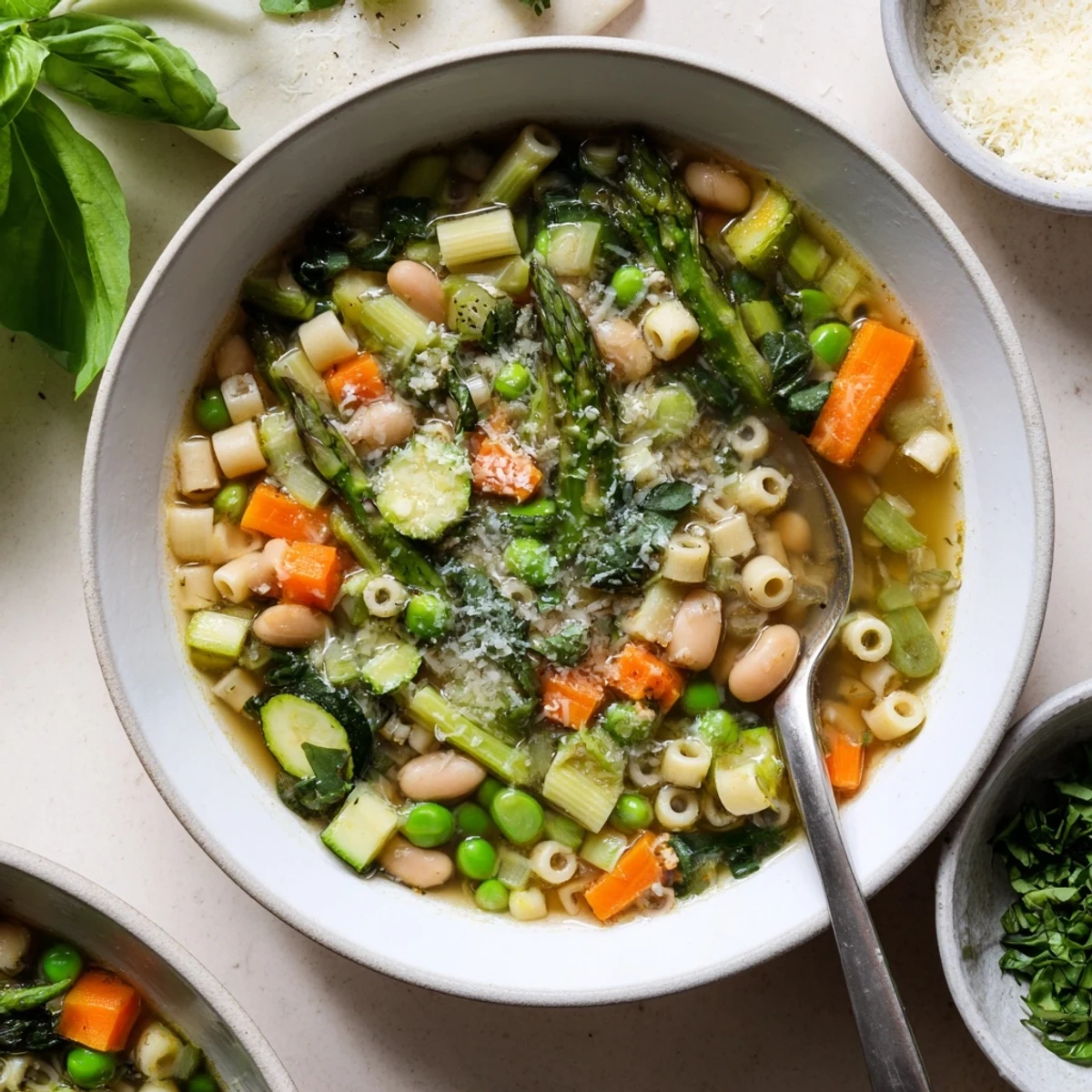
 My mother in law asked for the recipe after one bowl and I caught her writing it down on a napkin at the table. That napkin ended up taped to her fridge for the rest of the spring, which might be the highest compliment a soup has ever received in my family.
Swapping in Seasonal Stars
I have thrown fava beans, green beans, and even shaved leeks into this soup depending on what looked good at the market that morning. The framework is forgiving enough that you can follow the season instead of the ingredient list and still end up with something wonderful.
Making It a Full Meal
A hunk of crusty sourdough rubbed with raw garlic and drizzled with olive oil turns this from a light lunch into something that feels like a proper dinner. I also like to set out a simple green salad with a lemon vinaigrette because the acidity plays so nicely with the creamy beans.
Storing and Reheating Like a Pro
This soup actually tastes better the next day after the flavors have had time to mingle and deepen in the fridge. Store it in airtight containers for up to four days and reheat gently on the stove with a splash of water if it has thickened too much.
- Freeze individual portions without the pasta for up to three months
- Add freshly cooked pasta when reheating frozen batches
- Never microwave this if you can help it because the stovetop keeps the texture right
 Pin it
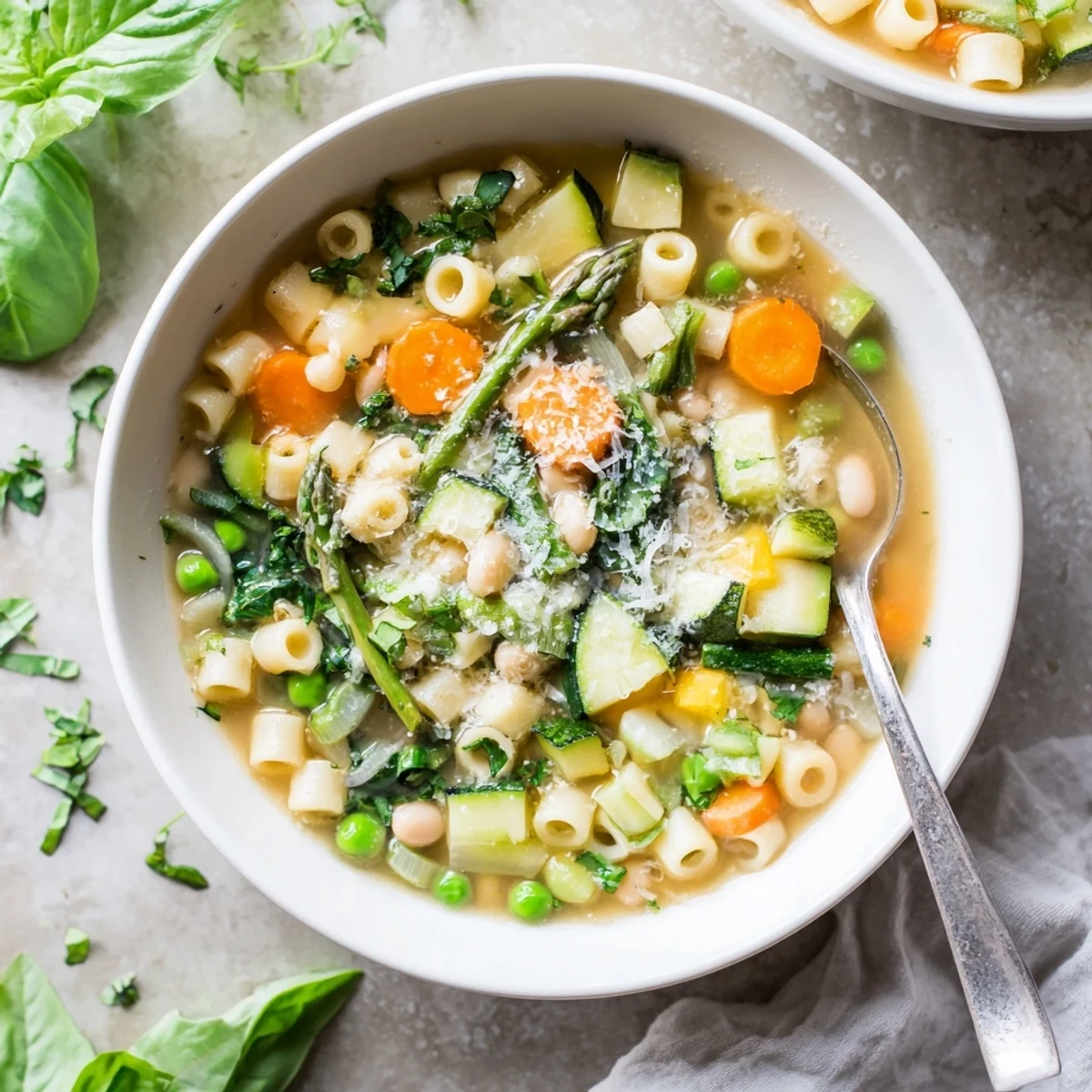
 Soup this simple and this bright is what spring cooking is all about. Grab whatever looks green and fresh and let the pot do the rest.
Recipe FAQs
- → Can I make this minestrone vegan?
-
Yes, simply skip the Parmigiano Reggiano garnish or replace it with a plant-based alternative. The soup itself contains no dairy.
- → What pasta works best for minestrone?
-
Small shapes like ditalini, orzo, or mini shells are ideal because they fit on a spoon easily and cook quickly in the broth.
- → Can I substitute the spring vegetables?
-
Absolutely. Fava beans, green beans, or diced leeks all work well. Use whatever fresh produce looks best at the market.
- → How should I store leftovers?
-
Keep leftovers in an airtight container in the refrigerator for up to 3 days. The pasta may absorb broth, so add a splash of water or broth when reheating.
- → Can I freeze this soup?
-
You can freeze it for up to 2 months, though the pasta texture may soften. For best results, freeze the broth and vegetables without pasta, then cook fresh pasta when reheating.
- → What should I serve with minestrone?
-
Crusty bread is a classic pairing. A light white wine like Pinot Grigio complements the fresh, herbaceous flavors nicely.
