
 Pin it
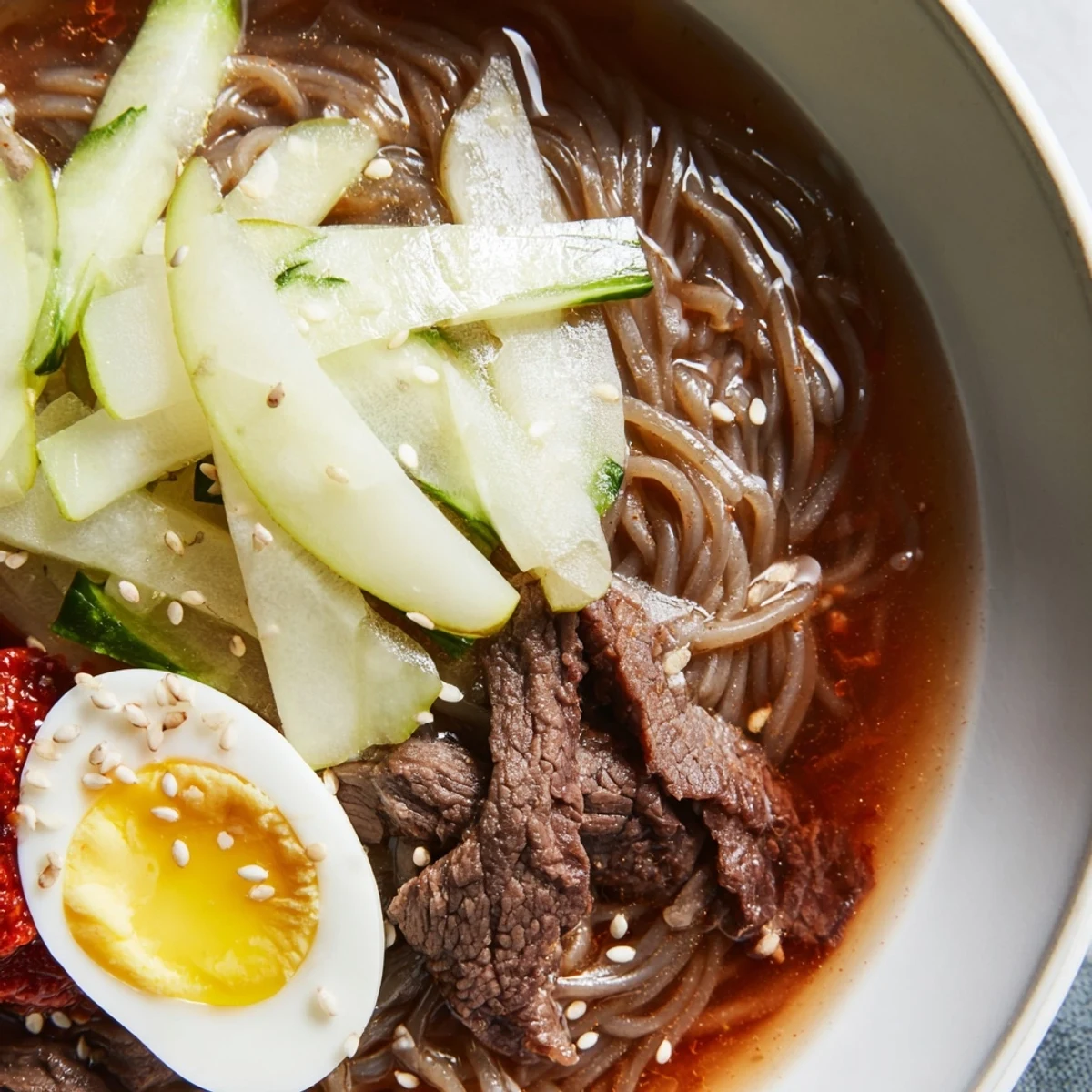
 Experience the revitalizing flavors of Korean naengmyeon, a beloved cold noodle dish perfect for sweltering summer days. This bowl features chewy buckwheat noodles swimming in a tangy, ice-cold beef broth seasoned with rice vinegar and subtle sweetness. The dish comes alive with refreshing toppings including crisp cucumber slices, sweet Asian pear, tender beef brisket, and creamy hard-boiled eggs. The secret lies in serving everything thoroughly chilled—some enthusiasts even add ice cubes directly to the bowl. A final garnish of toasted sesame seeds adds nutty depth, while optional gochujang provides a spicy kick for those who crave heat.
The first time I tried naengmyeon at a tiny Korean spot in Los Angeles, I was skeptical about eating something so icy cold on a winter evening. But one slurp of those springy noodles in that tangy, refreshing broth completely changed my mind. I've been obsessed ever since, making it constantly during summer when the thought of turning on the stove feels unbearable.
Last summer, my neighbor came over sweaty from gardening and I served her a bowl. She looked at me like I was crazy with all that ice, but after three minutes she was asking for the recipe. Now she makes it every time her grandkids visit, and they fight over who gets the extra gochujang.
Ingredients
- Beef broth: Homemade gives the best depth, but a good quality low sodium works beautifully too
- Rice vinegar: This is what creates that signature tang that makes the broth so refreshing
- Sesame oil: Just a teaspoon adds a gorgeous nutty aroma that rounds everything out
- Naengmyeon noodles: These chewy buckwheat noodles are the soul of the dish, though soba makes a decent substitute
- Asian pear: Adds a crisp sweetness that cuts through the tangy broth perfectly
- Ice cubes: Not optional, they keep the soup shockingly cold which is how its meant to be enjoyed
Instructions
- Make the broth ahead:
- Whisk together the beef broth, cold water, rice vinegar, sugar, soy sauce, sesame oil, and salt until everything dissolves completely. Pop it in the fridge at least an hour before serving because this soup needs to be teeth chatteringly cold.
- Prep your toppings:
- Boil your eggs for exactly 10 minutes, then plunge them into cold water for easy peeling. Slice your beef into thin ribbons, cut the cucumber and pear into paper thin pieces, and have everything ready on a plate.
- Cook and chill the noodles:
- Boil the noodles for 3 to 4 minutes until they're bouncy and chewy. Drain them well and rinse under freezing cold water for a full minute, tossing with your hands to remove all the starch until the noodles feel icy.
- Build the bowls:
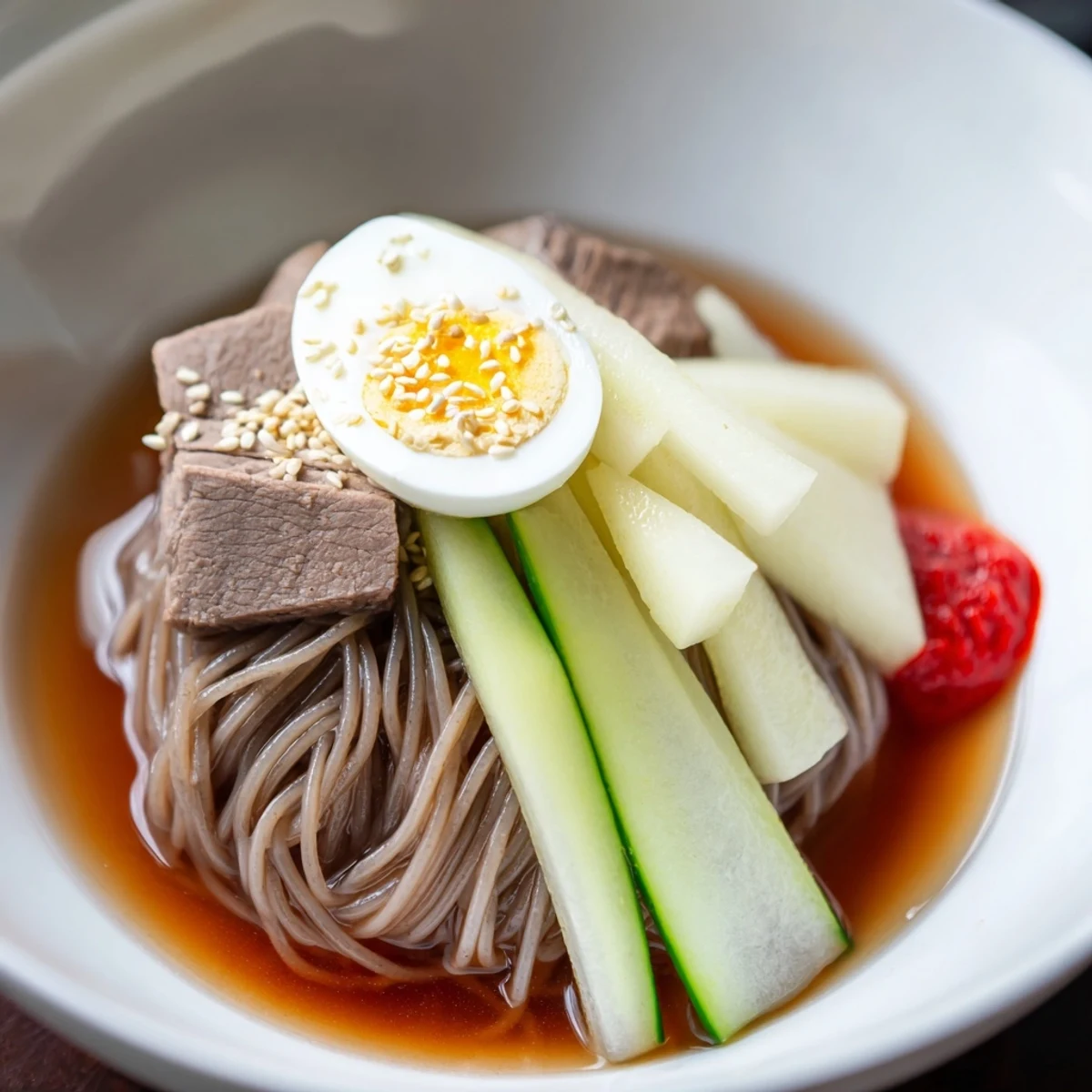
- Divide the cold noodles among four bowls and ladle that chilled broth over them. Arrange your toppings in a pretty pattern on top, tuck in half an egg, and drop a few ice cubes into each bowl.
 Pin it
 I made this for my brother who claims he hates cold soup, and he texted me at midnight asking if there were leftovers. Thats when I knew this recipe was a keeper.
Broth Variations
While beef broth is traditional, I've used chicken broth with excellent results. The real secret is adding a splash of dongchimi brine if you can find it at a Korean market. That fermented radish liquid adds a funky tang that takes the broth to another level entirely.
Noodle Wisdom
These noodles are sturdier than they look and can handle serious chewing. Don't be alarmed by how long they need to cook, and definitely don't skip the cold water rinse. I once rushed this step and ended up with a tangled, gluey disaster that taught me to never cut corners on the rinsing.
Serving Suggestions
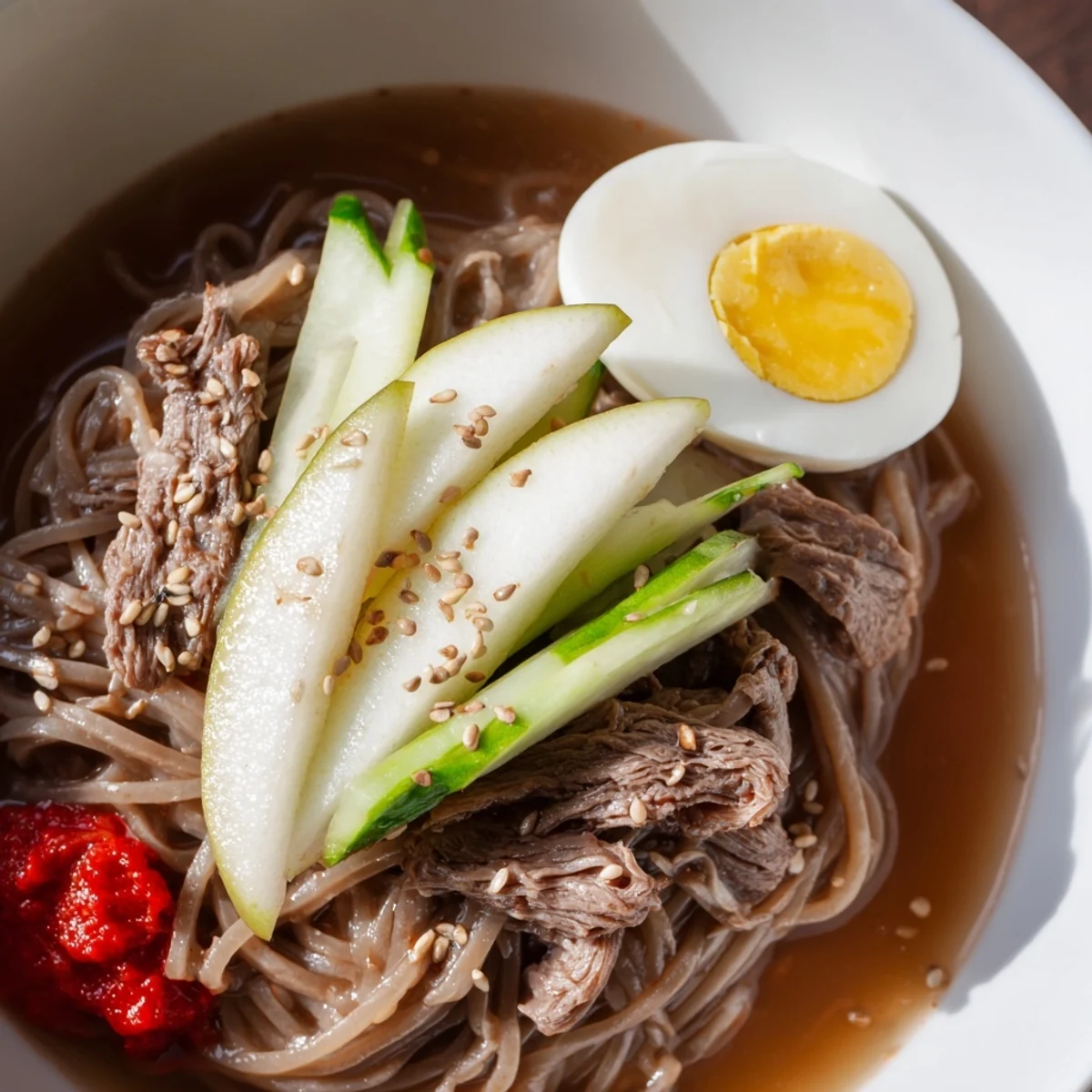
Put out small bowls of extra vinegar, mustard, and gochujang so everyone can customize their bowl. Some days I add extra gochujang until my broth turns a fiery orange, other times I keep it clean and refreshing.
- Kimchi on the side is basically mandatory for the full experience
- A few drops of sesame oil right before eating makes everything shine
- Use kitchen shears to cut the noodles a few times before serving easier eating
 Pin it
 There's something deeply satisfying about a meal that cools you down from the inside out. Hope this becomes your summer go to too.
Recipe FAQs
- → What makes naengmyeon broth so refreshing?
-
The broth achieves its refreshing character through a balance of tangy rice vinegar, subtle sweetness from sugar, and savory depth from beef broth. Served ice-cold, often with actual ice cubes, the combination creates an instantly cooling sensation perfect for hot weather.
- → Can I substitute naengmyeon noodles?
-
Soba noodles work well as an alternative, though they have a slightly different texture. For authentic results, look for Korean buckwheat noodles at Asian markets. Some varieties contain sweet potato starch for extra chewiness.
- → How far in advance can I prepare the components?
-
The broth tastes better when made a day ahead, allowing flavors to meld. Toppings like sliced beef, cucumber, and pear can be prepared hours in advance and refrigerated. Cook noodles just before serving to maintain their chewy texture.
- → What's the purpose of rinsing noodles under cold water?
-
Cold water rinsing stops the cooking process immediately, preventing noodles from becoming mushy. It also removes excess starch, keeping the broth clear and ensuring each strand remains separate and perfectly chewy.
- → Is there a vegetarian version of naengmyeon?
-
Replace beef broth with a rich vegetable or mushroom broth seasoned with soy sauce and dash of kombu for umami. Omit beef brisket or substitute with marinated tofu, shiitake mushrooms, or additional vegetables.
- → Why are hard-boiled eggs essential to this dish?
-
Eggs provide creamy richness that balances the acidic, tangy broth. Their mild flavor complements the sharp vinegar and soy notes while adding protein that makes the bowl more satisfying and complete.
