
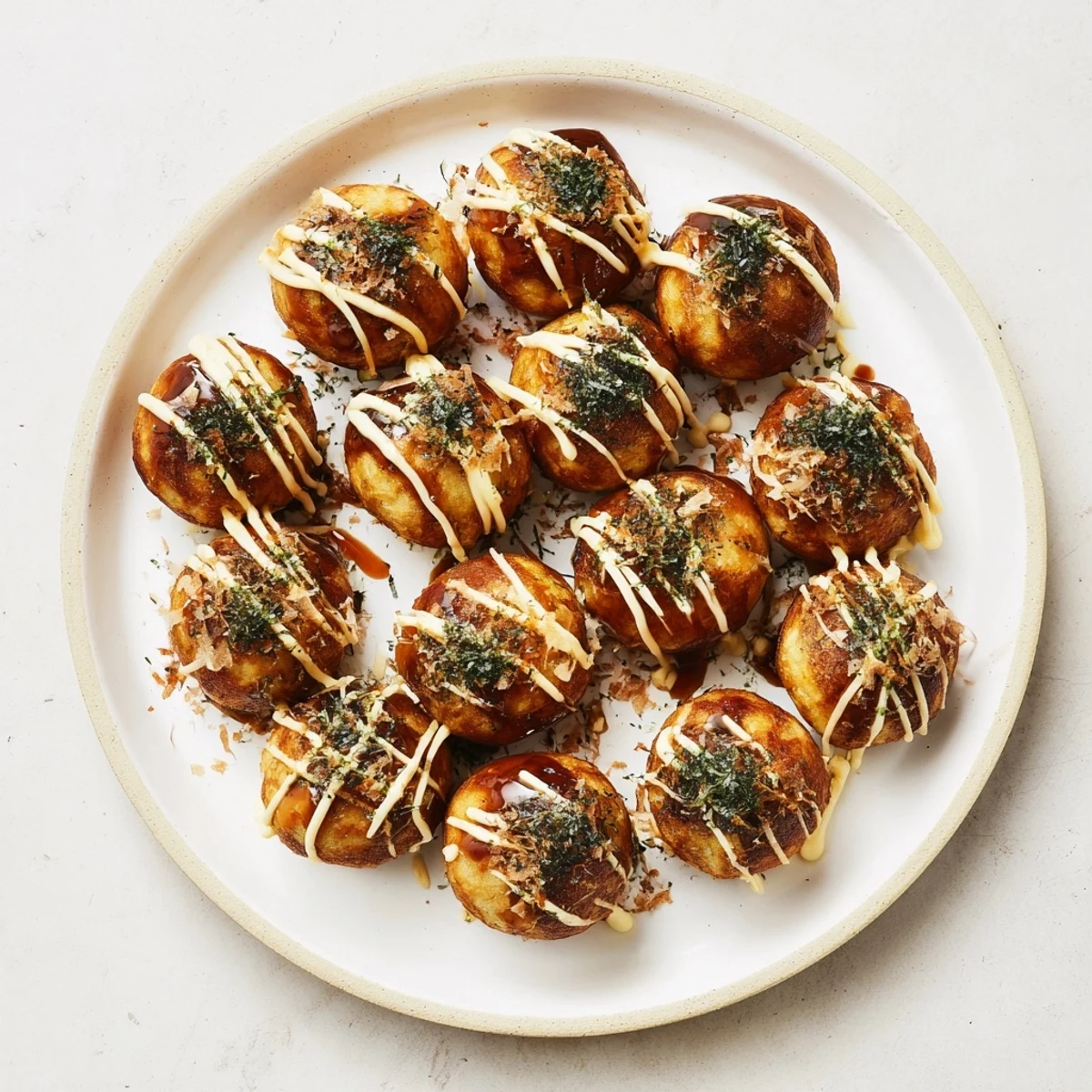
 Pin it
 Master the art of making these beloved Osaka street food favorites at home. The batter starts smooth and pourable, created by whisking flour with eggs and dashi stock. Each half-sphere mold gets filled with the mixture, then loaded with diced octopus, pickled ginger, green onions, and crispy tempura scraps.
The secret lies in the turning technique - using chopsticks or skewers to rotate each sphere every minute, allowing uncooked batter to flow out and form perfectly round shapes. After 8-10 minutes of constant turning, you'll have golden, crispy-skinned balls with soft, steamy interiors.
Finish with the classic trio of toppings: drizzle with sweet-savory takoyaki sauce, add zigzag patterns of Japanese mayonnaise, then sprinkle with dried green seaweed flakes and bonito that dance from the residual heat. Best enjoyed piping hot while the contrast between textures remains at its peak.
The steam rising off a takoyaki stand in Osaka is something you never forget. I remember standing there in the rain, watching the vendor's hands move with impossible speed, turning those little spheres like they were second nature. He'd slip me a fresh one while it was still too hot to eat properly. That single bite changed how I thought about street food forever.
Last winter my partner and I spent a whole Sunday perfecting our technique. We burnt three batches before getting the turning motion right. By evening, our kitchen was covered in flour and we'd eaten way too many, but we finally understood why people obsess over getting them perfectly round.
Ingredients
- 200 g all-purpose flour: This creates the structure that holds everything together while staying tender
- 2 large eggs: They give the batter richness and help bind the flour properly
- 600 ml dashi stock: Use homemade dashi if you can, otherwise good instant dashi powder in warm water works beautifully
- 1/2 tsp salt: Just enough to enhance without overpowering the delicate seafood flavor
- 1/2 tsp soy sauce: This adds that subtle umami depth that makes takoyaki taste authentic
- 1/2 tsp baking powder: The secret to getting that light and airy interior texture
- 150 g cooked octopus: Look for octopus that's already tender and cut it into bite sized pieces
- 2 tbsp pickled red ginger: Beni shoga adds bright little sparks of flavor throughout
- 2 tbsp green onion: Fresh onion brings a mild bite that balances the rich batter
- 2 tbsp tempura scraps: These crunchy bits create incredible texture contrast inside
- Takoyaki sauce: Store bought is fine, but homemade tastes so much better
- Japanese mayonnaise: The creamy element that ties all the sharp flavors together
- 1 tbsp aonori: These seaweed flakes add a subtle ocean aroma
- 1 packet bonito flakes: They dance on top from the heat and look absolutely magical
Instructions
- Mix the batter base:
- Whisk everything until completely smooth with no lumps remaining
- Prep your pan:
- Get it nice and hot over medium heat and oil each mold generously
- Fill the molds:
- Pour batter until each hole is full to the brim
- Add the fillings:
- Drop in octopus and scatter the aromatics on top
- Start the turn:
- When edges set, flip each ball 90 degrees so raw batter spills out
- Keep turning:
- Rotate every minute until all sides are golden and crisp
- Plate them up:
- Transfer to a serving plate while still piping hot
- Add the toppings:
- Drizzle sauce and mayo, then finish with seaweed and bonito
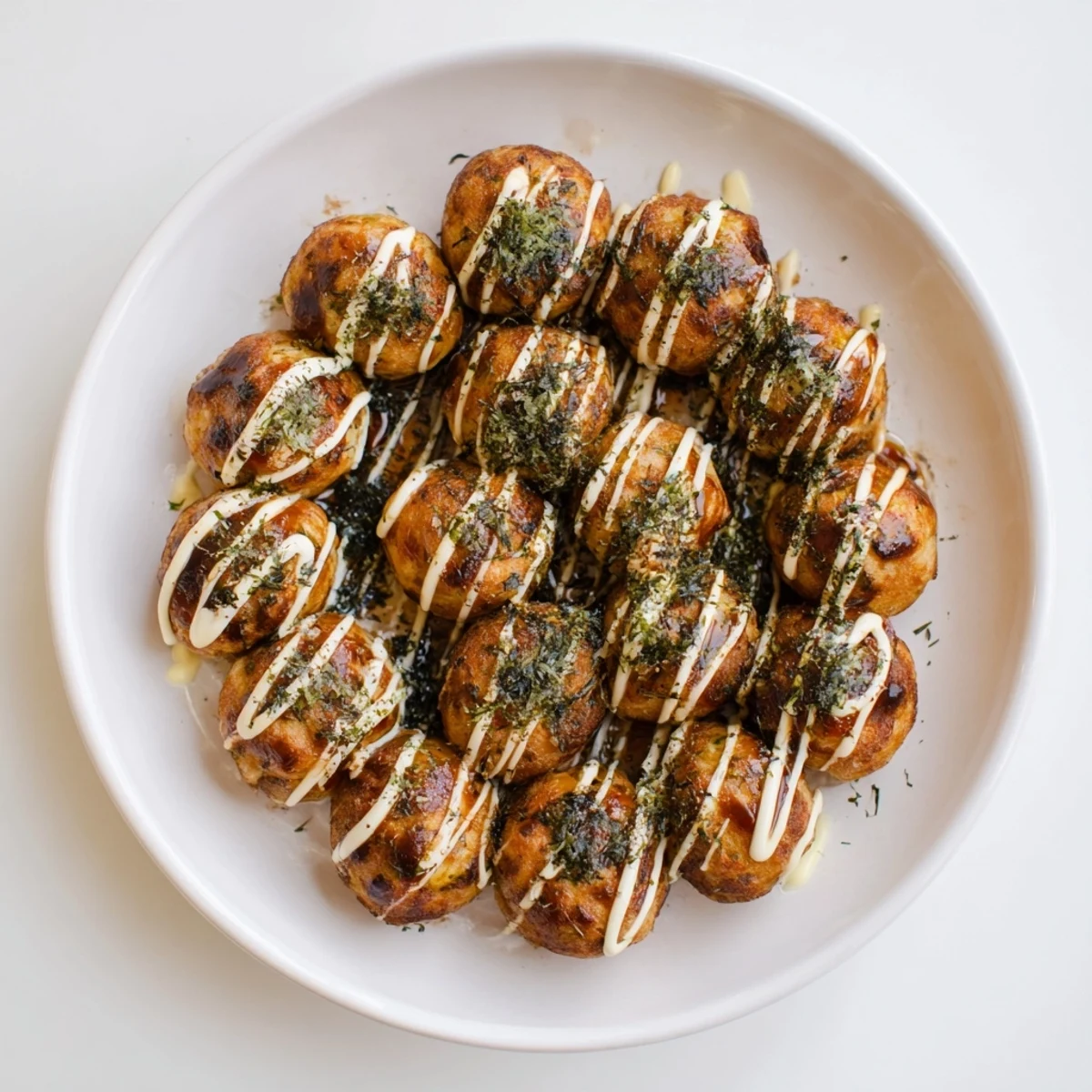 Pin it
 My friend's daughter described these as 'octopus hush puppies' and now I can't unhear it. We make them every time there's a gathering and watching adults crowd around the stove waiting for their turn makes all the effort worthwhile.
Getting The Shape Right
The turning technique takes practice. I use two thin metal skewers and work in a continuous motion, catching the edges as they firm up. Do not worry if your first few look weird, they still taste amazing.
Making The Sauce
Homemade sauce is worth the extra five minutes. Mix equal parts Worcestershire and ketchup, then add a splash of soy sauce and a touch of sugar. Let it sit while you cook so the flavors meld together.
Serving Suggestions
These disappear faster than you can make them, so set up your toppings station before you start cooking. Have everything in squeeze bottles or small bowls within arm's reach.
- Keep a small bowl of oil nearby to re-grease between batches
- Prepare extra fillings because everyone wants more octopus pieces
- Set the table before you start because timing matters for serving hot
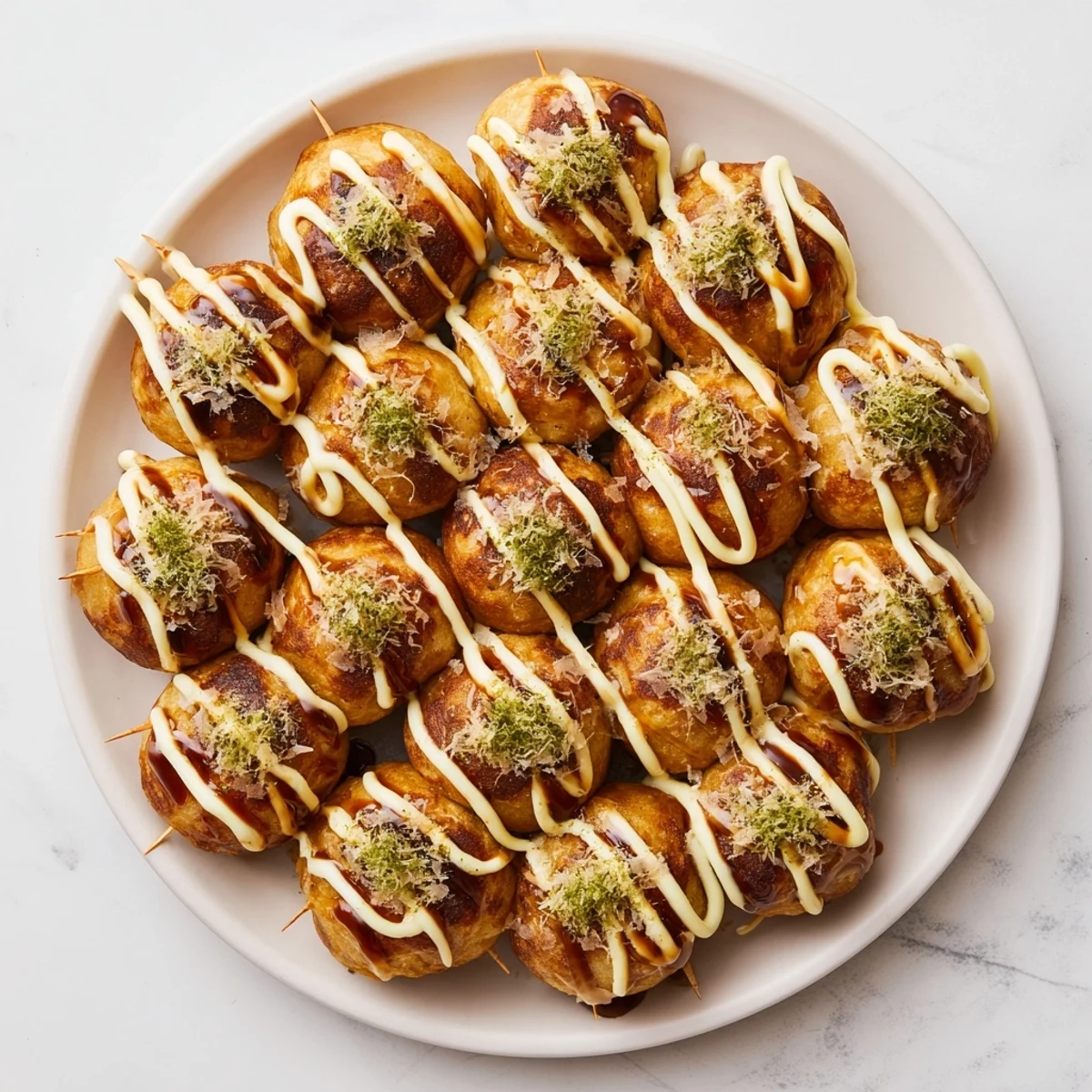 Pin it
 There's something so satisfying about mastering a dish that seems intimidating at first. Once you get the rhythm, making takoyaki becomes less like cooking and more like a meditative practice you'll want to share with everyone you know.
Recipe FAQs
- → What makes takoyaki authentic?
-
Authentic takoyaki uses dashi stock in the batter for umami depth, fresh octopus pieces as the primary filling, and traditional toppings including takoyaki sauce, Japanese mayonnaise, aonori seaweed, and bonito flakes. The crispy exterior and tender, steamy interior texture achieved through proper turning technique is also essential.
- → Can I make takoyaki without a special pan?
-
While a traditional takoyaki pan with half-sphere molds creates the characteristic round shape, you can approximate them using a mini muffin tin or æbleskiver pan. The texture and shape won't be quite the same, but you'll still get delicious octopus-filled battered bites.
- → What can I substitute for octopus?
-
Cooked shrimp, squid, or even small cubes of mozzarella cheese work well as alternatives. Cheese takoyaki is particularly popular with children. Vegetarians can use mushrooms, corn, or additional vegetables, though the traditional flavor profile changes significantly.
- → Why do my takoyaki fall apart when turning?
-
This usually means the batter hasn't set enough. Wait until the edges are visibly firm and golden before the first turn. A batter that's too thin can also cause issues - it should have the consistency of heavy cream. Practice makes perfect with the turning technique.
- → How do I store and reheat leftovers?
-
Takoyaki are best enjoyed immediately, but leftovers can be refrigerated in an airtight container for up to 2 days. Reheat in a 350°F oven for 5-7 minutes or air fry at 375°F for 3-4 minutes to restore crispiness. Microwaving makes them soggy, so avoid this method.
- → What's the difference between takoyaki and okonomiyaki sauce?
-
Both sauces are similar - sweet, tangy, and umami-rich with a Worcestershire base. Takoyaki sauce tends to be slightly thicker and sweeter to complement the plain batter, while okonomiyaki sauce may have a deeper, more complex flavor profile. They're largely interchangeable.
